/
/
51 min
Don’t be evil
Claire Stapleton
Fmr Google employee
About this episode
Claire Stapleton spent 12 years at Google from 2007 - 2019. She joined as a fresh grad at a time of peak optimism and idealism in Silicon Valley, and soon became somewhat of a ‘Bard’ - responsible for shaping the story and sharing the folklore around Google with employees and later the outside world.
In 2018, feeling increasingly disillusioned with what Google had become, Claire was one of the organizers of a 20k employee walkout in protest against the company’s handling of sexual harassment allegations against certain senior executives - one of whom, Andy Rubin, had allegations against him deemed credible by an internal investigation - yet walked away with a warm handshake and $90m exit package.
Claire and the other women who organised faced a backlash from Google with their roles and responsibilities being diminished in the aftermath.
Claire eventually left in 2019, and her memoir, ‘Don’t Be Evil’ has recently been released and is available at any good bookshop near you.
Claire’s own journey maps to a time in which internal and public sentiment towards big tech in general has shifted so we sat down to talk not just about her own experience at Google, but also the wider vibe shift in the industry as a whole.
I sat down with Claire to discuss topics such as:
The early idealistic days of Google
Claire’s role as ‘The Bard’ - telling the internal folklore of Google to its employees and the outside world
Google’s Me Too moment - her role as organizer of 20k employee walkout
The backlash that she and other women at Google faced as a consequence
The vibe shift from idealism to corporate ruthlessness
When she stopped believing the story she was telling
Her experiences of parenting and grief and how that shaped how she felt about her work
Full transcript
Humans in the Loop
Claire Stapleton (00:00)
it was kind of its like benevolent empire era then, you have so many executives fighting for, attention and resources. And, it’s kind of Game of Thrones, right?
Seb (00:08)
how do you get from those principled guys who have this anti-corporate inclusive, ideological, optimistic outlook how do you then go and be the first ones bending the knee to Trump?
Claire Stapleton (00:20)
the Andy Rubin story was the Me Too catalyst basically for Google.
Seb (00:25)
he basically walks away with a kind of warm handshake and a ninety million dollar exit package.
Claire Stapleton (00:30)
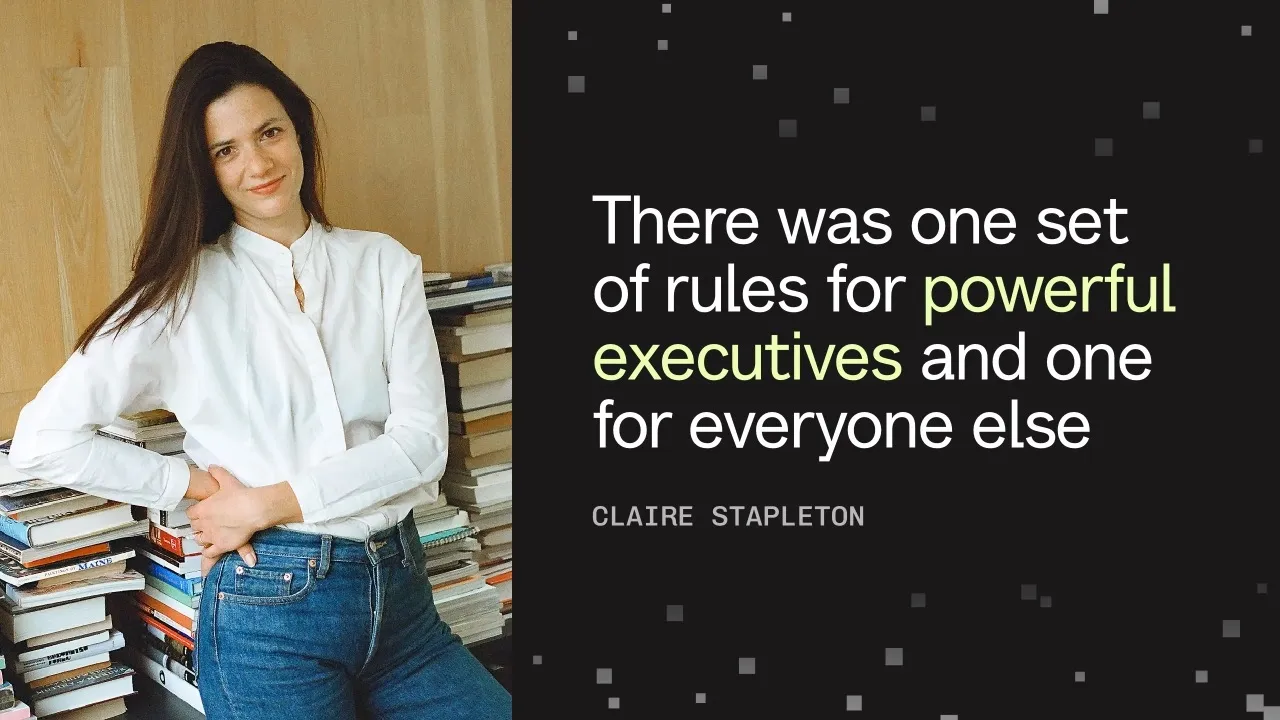
employees read this and were basically like, okay, so there’s one set of rules for the powerful executives and and then there’s like one set of rules for everyone else.
Introduction
Seb (00:48)
Welcome back, Teamers in the Loop. Today we’re going to be talking about the vibe shift in big tech. And I’m excited to be joined by Claire Stapleton, a former Google employee who experienced some of this shift from the inside. Claire worked in marketing at Google between 2007 and 2019, and notably was one of the organizers of the 2018 Employee Walkout, protesting the company’s handling of sexual harassment allegations against senior executives. She’s just published a memoir of her experience entitled Don’t Be Evil, famously one of Google’s early company values. And I’m excited to talk to her more about her experience. Claire, welcome to the show.
Claire Stapleton (01:26)
Thank you so much for having me.
The story Google told itself
Seb (01:29)
Let’s maybe kick things off with you know, there’s there’s a lot of like story and kind of lore around Google. And like as I understand it, you know, full disclosure, I’ve not had a chance to yet read the book. it’s I’m I’m very excited to, but as I understand it, you like played a an important role in shaping some of that kind of law for internal purposes. So I I guess what’s the story Google has been telling itself? And how do you see that story kind of evolving over time?
Claire Stapleton (02:01)
Yeah. So I started at Google in the summer of two thousand seven, which is a which was a kind of unique time where the the tech industry was hotter than hot. Silicon Valley was back. They were hiring like crazy. and, you know, I was you know, an English major, so I was sort of doing literature in college, nothing to do with technology, not a coder, not someone who, you know, was particularly tech savvy even, but they were recruiting people from all different backgrounds. and in the communications department, they wanted people to come h tell the story of the company. everyone seemed to really buy into and and sort of, you know, gawk at the the the types of companies that Google was really spearheading. I mean, it’s sort of a new kind of corporation. As much as Google was you know, transforming the world with Google search and you know, Gmail was pretty new and Google Maps and they’d bought YouTube. I mean, Google was a sort of big player. but something they were really interested in was workplace philosophy. And, I think that was basically best exemplified by the campuses, which tons of free food, fresh food, local and organic and healthy. And you know, there would be laundry rooms on site and sort of all these sort of like thoughtful sensory details in the workplace, open plan concept. And So, you know, as I came into it, I was, you know, immediately tasked with being, one of these young people who gave a tour to, journalists who’d be coming to, you know, see see and you know experience the campus. and yeah, I think that the the Google had quite a lot to say about its workplace philosophy, how they hired the best people in the world, gave them tons of resources, and then thoughtfully arranged them in these campuses to encourage collaboration. And Problem solving, and there was a lot about how you know, the mission of the company to organize the world’s information was going to be this equalizing force, this democratizing force. It was, it was really going to change the world. And there was no sort of watering down of that. It was like, you know, we’re
Seb (04:02)
Mm-hmm.
Claire Stapleton (04:03)
we’re we’re going to make the world a better place. It was a very positive, techno kind of optimistic vision. And so I was just sort of one cog in that wheel and that story. But it was very important to Google that it’s cultural values, it’s moral language. I also worked on a weekly event with the founders Larry and Sergei would host with employees where they could come and ask questions about everything going on in the company, which sort of just summed up also how the company was really invested in being very transparent and employees have a voice. And you know, all of these things became more complicated and more expensive for Google over time. But for years that was really the promise of the company. They nourished the employees, you know, with with a lot of the stuff. as I see it, Google kind of when I came in 2007, the company had already gone public. It was not a startup by any means. It was a big company with with offices cropping up around the world, a massive campus in Mountain View. but it still had that overgrown startup feel and the family feeling and a sort of a smaller company vibe, I guess. And, you know, the big tech companies with, you know, Google kind of top of the heap, have and Apple as well and you Facebook, all these companies, they’ve become this critical infrastructure of the world. And so the the the consequence of the of the work as well as the complexities of being these really kind of big, almost like institutional powers, you know, in the world. and and the the employee story and the workplace story has been a big part of that shift in from my view.
Perks, campuses and the university feel
Seb (05:26)
Mm-hmm. So like 2007, as you say, it’s like this kind of peak optimism. I I can’t actually remember when it was exactly in terms of year. but not too long after that, I visited the the the Google campus for like the first time, met a friend who was working there, and you know, it was it was it was pretty Amazing, you know, the scale of the thing. I remember be t being taken into the canteen and just kind of like spreads of food all different kinds of cuisine. And you know, this is stuff that like maybe if you work in tech today, you maybe take a little bit for granted as like, this is kind of the way this thing works. But like a lot a lot of this stuff in terms of just like the the kind of the perks and the aesthetics of working in. tech and in big tech particularly, like, did not really like you know, that it didn’t didn’t feel like that existed pr prior. That like Google really kind of like set a lot of the the the standard for for that stuff, it seems.
Claire Stapleton (06:28)
Yeah, definitely. Yeah, they were out front in that. And I think you know, it was they were trendsetters. I think it became sort of table stakes for companies to have these nice offices that people could bring their friends and you know, there there was a sort of a generosity but the generosity was strategic also because I think they felt like, you know, if people feel really well cared for and well nourished and all these other things, they’ll, give more to the company. Also there was a little bit of this sort of you a a bit of elitism, right? That we we hire the best talent and, they are this sort of rare breed of people and they should be treated like, young masters of the universe. you know, and and make it fun. It was really it was also very much a university feeling. There’d be like s video game rooms and, you know, in some offices and, you know, people would kind of stay all night, you know, doing hackathons and then sort of hanging out. So it was it it it created a really attractive place for young people where people were happy to bring a lot of themselves, into the work. but then paired with this idea that together we’re all working on this project that will you know will transform the world in, unquestionably positive ways. that attitude towards the tech industry in general, inside and outside these companies, has really shifted.
Seb (07:36)
Mm. Mm. it did feel in my very like microcosm experience and I’m interested to get your your take here. Like it did feel that there was a certain authentic belief back then, maybe maybe naively so, but like that A well, A we are changing the world. Like this you know, you can you you can argue whether for like good or bad, but Google has undeniably changed the world. and also has rewritten some of the rules around how organizations get built as well. So at the time for you, how like how authentic did this did this like all feel?
Claire Stapleton (08:13)
I know, I think that, you know, because so much of it was the spirit of the founders of the company. And I think it was like quite sincere. You know, they they they went to Waldorf schools, I guess, well, you know, like a sort of like a kind of a more kind of loose and creative and child led type of school. and I think that they thought that that was a great environment. And and to create a great environment to take care of employees, I mean it it it it would be really hard to look back on it and say, this was completely craven. That like the whole thing was just about, you know, ensnaring people. I think it’s it’s just interesting that the the way the that the office was set up and the way that the the culture was sort of set up, I think cr created a sense of identity around being a Googler. And it’s not that that was inherently bad or inherently good. It’s just that it became complex over time. As the mission of the company changed, as the view of the tech industry changed. and, you know, and and then the you know, also the, you know, the the people at the top become incredibly consequential, you know, multi multi-time over billionaires, the the salary packages got huge for the people at the top. so, it couldn’t maintain that small feeling, despite, you know, the thoughtful design of the campus, which For the record, now it’s even more architectural and thoughtful. And they have all these like, you know, workplace designers. I mean, the resources of tech to kind of create these sort of show stopping offices has like only increased actually over time. So they definitely still believe, I think, in you know, the design of the office influences the work product influences, the teams that are built and all you they they’d have these, you PhDs who study organizational psychology, who work on all these different aspects. I mean, Google was full of kind of smart people working in all sorts of different roles of the company. So yeah, it was it was never a big conspiracy, I guess, is would be my view. But yeah, it’s just been an interesting evolution.
Where “Don’t be evil” came from
Seb (10:09)
Yeah. What what do you know about the the origin of like the the don’t be evil thing, right? Cause like most most organizations when they when they spin up don’t give themselves a value of don’t be evil. And I guess as much as it’s maybe a little like tongue-in-cheek, within that phrasing is kind of an acknowledgement that you could become evil, right? It’s like you’re you’re you’re like feeling like it’s necessary to say that that like this is something we should deliberately not do. And so where did Dope Be Evil come from?
Claire Stapleton (10:41)
It’s such a bizarre double negative, isn’t it? It’s like w now it
Seb (10:45)
Yeah, yeah, yeah.
Claire Stapleton (10:46)
it’s like now I’m thinking about what evil would be, you know, as you’re putting the word in the mind, right? It’s very it’s a very strong word. You know, there’s multiple accounts of where that came out of, but it sounded like it was like when there were just a couple hundred employees and they were like on a whiteboard and you know, some engineer who’s not the founders, you know, w they were trying to write their company values out and he, c that someone came up with this turn of phrase and people just sort of, you know, loved it or you know, cotton onto it. I think what’s what’s maybe more interesting is that they used it at at the top of Google’s code of conduct they gave all employees. And it seemed really connected to Larry and Sergei’s vision that it w it was of being an anti-corporate culture, of being you know, they when they went public in 2004, which is a huge financial event really changes the nature of the company in a lot of different ways. Larry and Sergei wrote a a letter that was published alongside that initial IPO saying we in the you know the first line of it, we are not a conventional company and we do not intend to become one. So it’s sort of like it just the the kind of contradictory or irony as you’re kind of doing the sort of big corporate move, you know, you’re you’re aligning with the sort of big corporations, you know, in the market. that they would desperately want to maintain holding on to these values, there’s this sort of skepticism inherent in, you know, the cultural mind of always it ebbs and flows, but that like kind of corporations are bad. You know, that there’s sort of like they’re inherently
Seb (12:06)
Mm. Mm.
Claire Stapleton (12:08)
greedy and, you know, power consolidating. They do immoral and unethical things. And, you know, I think that the, you know, the founders of the company wanted to really hold on to a spirit of we’re doing good. You know, and and we’re not gonna be like the other big baddies. you know, and I think you know, a lot of people, again, kind of looking back in it, would say this was always a marketing exercise. This was always about portraying tech in the most positive light so the world accepts the kind of domination that, has sort of swept the planet, by the technologies that have been created. but I do think there was they wanted to hold on to that small company, the small company that had been I it’s just that’s just the crazy twist of fate or or evolution of our world is that these companies just became so massive. I don’t think people really saw it coming.
Seb (12:53)
it would be kind of like too simple a story, I think, to look back and kind of say, like, yeah, it was all just like a cynical marketing ploy. Right. It’s like to me, it feels like, yeah, there must be some level of authenticity there. I don’t view it as like this, yeah, just just very root one story of. It was a big conspiracy, they just played the marketing game and they won. But I do also ask myself, like, how do you get from like those principled guys who kind of determined to have this like anti-corporate but quite kind of like inclusive, ideological, optimistic outlook through their company? how do you then go and be like the the first ones bending the knee to Trump? You know, and and kind of we can come on and talk more about like what the vibe sort of feels like now, but from everything I hear from the people that work within Google and within other other big tech companies, is it’s very far away from that right now. And
Claire Stapleton (13:55)
Yeah.
Seb (13:56)
so it’s yeah, to me that’s that’s that’s like the baffling thing. It’s like how do we get from there, if you believe there was any authenticity to it, to like where we are today and like where the hell did things go wrong?
The benevolent empire era
Claire Stapleton (14:08)
Yeah. I think actually like the time that I was there as Google was becoming so much bigger quickly. The hiring was crazy. The money was, you know, that the the success and the health of the business was really wild. but you know, it was kind of its like benevolent empire era then, because actually they they they doubled down on a lot of the rhetoric. So Larry Page they had hired a guy named Eric Schmidt, who was the head of the company for a Big period of the company’s growth. But then Larry, for whatever reason, ended up deciding he wanted to be the CEO again. So for a brief period of time, he became the CEO again. And I, you know, was working and still in the, Central Comms team. a couple of things happened in that time where it Google became Alphabet. So that’s, you know, it was an acknowledgement that the company had become so big that it was essentially like a holdings company because they had so many different entities. And he was also trying to clear the path for Google X and other places where there could be this sort of genuine innovation going on. But his own rhetoric and his own own kind of speeches, of of which he only gave really a few, doubled down on the kind of techno-optimistic vision and as well as, you know, with all the resources we have, we have this sort of responsibility to humanity to make things better for everyone. If we if we make computers so good, they’re going to radically transform the human experience so people can be, learning, living and loving. That’s something he used to. It was like his kind of like kind of hokey catchphrase. But I think that like this the scale just started to change, you know, the institution and Larry would talk about this. He was obsessed with why companies stop innovating, why they get so obsessed with competition, why they the culture starts to kind of atrophy and decay. All things you could argue kind of happened. And I think in some ways it’s just inevitable with the scale of the company, the complexity of the business, you end up from my vantage point, and it is sort of what I get into in the book, is that. You know, what I saw was actually that the company couldn’t combat the internal politics that that got started because it’s like you you have so many people, so many executives fighting for, attention and resources. And, you know, it’s kind of Game of Thrones, right? And so, people who climb the hierarchy aren’t the people who are most invested in the values, most invested in that kind of grassroots culture. It’s people who are really savvy at playing the more corporate games, arguing for more budget and headcount, sort of like, you know, window dressing, packaging the work, You know, it it was so it’s a combination of company gets big, the mission of the company becomes a bit more diffuse. And I think probably revenue targets and other things become more important in certain ways. But then you also have the experience of being a worker in that company and and feeling less connected to the mission in ways that are kind of the natural progression of being in a more corporate, you know, built-out environment. and Yeah, the leadership changed too. So Larry Page stepped down and they they hired a guy named Sundar Pachai who seems like a very steady hand, can manage a lot of different stakeholders. but it’s just a different vibe than having the, you founder of the company who was at, you know, on stage every week, you know, kind of like very organic, more you know, that that sort of feeling. So I I think the company had to grow up and but it lost a lot in that process.
Seb (17:13)
We we we talked a bit about like the yeah the aesthetics and the campus and the food and the perks. In terms of the like the core of the work and the work culture specifically, what was Google like at its best in the early days?
Claire Stapleton (17:29)
Well, I think, you know, for me, when I when I really looked back on it, I I do feel that part of the promise of we’re hiring these young people and we’re just throwing them in there and the and it it’s a flat organizational structure and you can have all this responsibility. You know, that really was sort of true for me because I you know I came in there with zero work experience, certainly no PR communications experience. And you know, by the second or third week, I was writing talking points to go in the script for the TJF meeting. And I remember so distinctly that I made some sort of verbiage mistake. I was talking about what’s happening at Google during that week and the milestones, and I was talking about something with Gmail hitting some milestone, and I just like kind of messed up some stat, right? And, you know, it it even though it was mortifying and I thought I was gonna get fired, which I luckily wasn’t, but it was like one of those things where you’re like, how amazing that I w actually was putting words in the mouths of the of the heads of the company like three or four weeks in. That that shows you that it actually was this sort of playing field where, you know, they were kind of like, walking the walk, right? You’re throwing these young people in there and you’re letting them try things and and have this responsibility. the word googly, you know, it meant a lot in the culture and meant a lot to a lot of people. And you it was sort of part of how you were evaluated. Like I also looking back, it’s just so funny. This sort of endless grades, it’s like getting grades in school. It’s like you’re always having
Seb (18:52)
Yeah.
Claire Stapleton (18:52)
a performance review, you’re always having like a mid-quarter check-in. I mean, it’s just all the the the the evaluation of people, that’s that’s a real head trip, I think, for one. But I feel that Googliness sort of s meant being a good team player and being someone that, you know, people like to work with, being kind of a generous teammate, jumping in on things, being collaborative, being creative. there was some value given to something that’s actually essentially not money making, right? Or it’s not p political. It’s being a kind of nice person and being a good teammate. So it the sort of I think that a lot, you know, a lot of people liked working there, not just for the perks, but because it felt like a kind of friendly. environment. But you know, I think there was a kind of a spirit to it that was sort of lovely, you know, in it in its way.
When the belief started to fade
Seb (19:34)
So when you know you you end up leaving in in 2019 and and we’ll come on and talk a bit about like the walkout in a minute, but when do you remember like at what point does your kind of buy-in to the overall ideology and kind of idealism? When does that like start to fade?
Claire Stapleton (19:54)
very it was very gradual. I think there were there were some times when, you know, toward the end of my time in Mountain View, which was a five year stint, I, you know, sometimes felt like there was a bit of grandiosity. It started to feel like some of the rhetoric was a bit grandiose, right? About, you know, how what how what Google’s gonna cure death. That was like where there was a there was a big Time magazine cover back then that was like can Google cure death? It was sort of this idea that everything is a computing problem. And I it wasn’t that I really had the frame of mind to say like that’s completely impossible or whatever. I just was sort of like, you know, it it started to feel like the problems of society were mounting a bit, right? polarization, right? Social media was coming into the fold and there were like immediately some complexities with it. But then the the the real thing for me, the real turn was going from a pretty good work environment in the communications department in Mountain View. And I I got offered a job in New York. And that department was, it was a version of what I’d been doing and sort of like helping disseminate Google’s values and the mythology and all those other things in Mountain View. But they did it in this sort of Advertising way. So they did Google Super Bowl spots. they would consult on Google’s major kind of branding stuff. Like, you know, Google Glass was coming out at that time, and they did all this sort of like conceptual stuff about it. So it was a lot of really kind of like smart creative people. However, I just had a kind of typical horrible work experience there. I was like, I was kind of constantly like, why did you guys hire me? I’d I I kind of loved and believed in, you know, the kind of company culture so much. And then all of a sudden I’m like, this culture feels pretty toxic. And it was one of these dissonant moments where I’m like, I’m absolutely freaking miserable in this department, and yet still I’m s I’m kind of supposed writing these talking points that are about how this is like the most amazing workplace, you know, ever. And so, I went to the marketing team at YouTube, and that was a a more intense version. The the work environment at first was fine. It was that you know, we were tasked. YouTube and and social media companies and tech in general was starting to turn in the public eye. And so the marketing became, all right, let’s not just try to, you know, harness and you know, and and exemplify the the goodwill that the public has for tech, we actually need to kind of go and and counteract some of these negative narratives about YouTube So it was we would get a briefing every day that was about all the kind of, you know, horrible things going on on YouTube. it was the dawn of creator culture where I don’t know if you remember this guy Logan Paul had a big big controversy where he filmed a dead body in the suicide forest in Japan. And it was, it was sort of it it really summed up the the kind of lack of content moderation inherent to a platform like YouTube, where this guy’s huge audience, you know, it was it was shocking, you know, and YouTube kind of struggled to take the video down. It had already gone into the sort of trending algorithm and and then kind of struggled to address the controversy because because he was such a big star, I there was a big a big gamer at the time named PewDiePie, who was the top guy on the platform, and he, said the N-word and streams at times. You know, it’s like he was, he was
Seb (22:48)
Mm-hmm.
Claire Stapleton (22:49)
kind of flirting with directing his audience to neo-Nazi related channels and stuff like this, where, you know, there was just a and there was child predation going on, and there was a lot of kind of scrutiny of what’s going on on YouTube. and yet, you know, being being sort of in the trenches to kind of keep pumping out the most kind of happy clappy narrative about about the company and about you know all the amazing things happening on it. It it was just a sort of like cognitive dissonance that was sort of sort of just fomenting in me, you
Seb (23:18)
Yeah.
Claire Stapleton (23:20)
know, over a period of time. But I continued to just do the job. I mean I stayed in that group for five years,
Me Too, Andy Rubin and the walkout
Seb (23:25)
Yeah, yeah. Ta take me to twenty eighteen and the walkouts. So, for context here, as I understand it, you were one of the organizers of a walkout of around twenty thousand employees that came about basically protesting against the way the company had handled sexual harassment, allegations made by employees about certain senior figures in the company, one of whom Andy Rubin, the creator of Android. We should say, I think denies these allegations, but he was accused. As I understand it, there was like some internal investigation where they basically determined that like this these allegations seem credible. Despite that, he basically walks away with a kind of warm handshake and a ninety million dollar exit package. you know, pretty pretty good outcome for someone who’s who’s done the things he’s or you know, if he’s done the things he’s been accused of. So tell me about like the atmosphere in the company going on around all of these allegations. This is obviously also kind of peak, Me Too moment culturally speaking.
Claire Stapleton (24:34)
Yeah.
Seb (24:34)
so yeah, like how how how is this kind of going on in within the company? And and then how do you end up kind of getting involved in the in the walk
Claire Stapleton (24:40)
Yes. I mean the latter is a question I like wrote the books or kind of answer because I was I was pretty like, you know you know, in a certain way maybe had become a bit more of a voice that would challenge things I didn’t think were right. But you know, I had been really kind of like a corporate good girl, I guess could say. So it was not the most obvious turn for me. But yeah, I th so the this was Right after the Me Too it was right in the midst of the Me Too movement, really. I mean, so this was two years into the Trump’s first presidency. you know, there there was a there was a rupturing in American society and globally as well, where women were starting to tell their stories, and I think that, you know, the women at a company like Google, it’s a complicated relationship one has to the experience of of sexism or or even claiming that, because I think, you know, it’s a privileged workforce. Where, again, the the company has talked a lot about its commitment to equity and inclusion and all you know, all these things were, you know, it’s not to say that there wasn’t sort of thoughtful, a thoughtful design of a culture that you know would feel fair, right? but so the Andy Rubin story was the Me Too catalyst basically for Google. So Right. As you said, the New York Times had this, you know, big investigation that was it was about, you know, a couple of different executives. But the the larger the larger kind of point was that employees read this and were basically like, okay, so there’s one set of rules for the powerful executives and and then there’s like one set of rules for everyone else. I mean it’s like it’s kinda w when I was looking back at it, it’s like Andy Rubin got paid two million dollars a month for four years. it was you know pretty Pretty crazy. I mean, and people would would counter that and say, well, you know, it’s this is probably all very contractual with if there was an exit, you know, whatever. But boiled down to it, within the Me Too movement, it’s like, okay, you have this guy who Google had even found in its own investigation. They thought the allegations were all credible. and then they kind of give them a hero’s farewell. And then what happens to the women who made the complaints? Yeah, they were shuttered out of the company. And the other stories in that piece also showed that that executive named David Drummond, who was the head of legal, who also oversaw HR, had actually had a child with with one of the women on his team. And she had she later came out and said, you know, I was pretty much pushed out of the company with nothing. and whereas at that time he’s no longer there, but at that time he was still overseeing it. So it’s it’s you see these sort of structural issues, right? If that if someone who’s d responsible for that kind of conduct actually oversees HR, how might that undermine, you know, how how that situation, that messy situation, you know, that abuse of situation get gets handled? and so, you know, I I had I just come back from maternity leave and I was really engaged as I had a difficult time kind of coming back from maternity leave as as many people do. It’s just that transition can be very jarring. And I so I I would often check in on this email list, a sort of mailing list forum for moms of the company, which was not political or, you know, anything about this kind of thing. It was actually mostly about just mom stuff going on. Like, you know, people would be having like, you know, synthesizing studies about boosting baby brains or you know, all the things that people talk about. but you know, when the Rubin story broke. Women it was an anonymous list. Women took to that list to kind of have this Me Too moment about the kind of experiences they had at Google, which seemed to me expressed this gap between what the company said it was and these experiences where people had reported things and nothing had happened, or there had actually been blowback to their career, where they had been, you know, denied projects due to, you know, kind of boys’ club type of favoritism. You know, people had been outright sexually harassed at offsites. Again, like back in the old, you you know, back even in the the sort of like this later period, you know, part of the perks culture was there would be a lot of these, you know, off sites with lots lots of alcohol and they take you places. And, you know, I think that in many ways, I think women had felt unsafe, you know, or unsupported if in and like, you know, the the kind of classic gambit. And a lot of people say to me, like, HR was never your friend. Like you you people were kind of stupid to think that. Of course the HR is just there to you know, protect the company from liability or whatever. but really again, Google, you know, the guy who was the head of HR wrote a book about, kind of good, thoughtful, mindful management, and basically like about how HR had to constrain the power of managers and how all these kind of it was very thoughtful, like all these kind corrupting influences that are inherent to a corporation. But of course, HR had become a sort of failure or something that the employees couldn’t trust. So it’s it created this really weird situation where women who had experienced any manner of difficult. management situation had felt like there was sort of no recourse. And because there’s this sort of golden handcuffs of a of a company like Google where you take a pretty good salary and there’s great benefits. And now again, all these women are moms. So you’re now you really don’t want to lose your health insurance or all these other things. That people felt this in this brief aperture moment where it opened up, people were like, F this. Like this is really
Seb (29:40)
You won’t.
Claire Stapleton (29:41)
tough. That like, you I that I’ve had to like, you know, lump it through something that was really traumatic, you know, because I need to keep this job and all these other things. And it was it was just, it was like broadly like very disillusioning. everyone sort of experiences difficult things in the workplace in a somewhat isolated manner because that’s how it works. Like, you it’s like I never really like complained
Seb (29:57)
Yeah. Yeah.
Claire Stapleton (29:59)
about much, you have the chain and all this. You know, to hear that, so many people had felt so alone, in these sort kind of like shitty work experiences at Google. I’m like, wow, what happened to Google? Like what happened here? You know, and there’s all these stories that paint a very different picture than the one that Google has told and so women were starting to talk about writing a petition or perhaps showing up in a group to TJIF, the weekly meeting I used to work on. And I think that that’s where something kind of came out of me where I was like, that’s not enough. Because I know how it works with even with the best of intentions, what happens in those meetings is that the dissent is absorbed. you kind of blow off steam and then the executives deliver the talking points, you know, talk about it being empathetic and hearing it and all that. And then that’s over. And it’s, you know, it you really don’t ask the questions two weeks in a row and it doesn’t change anything, really, right? So
Seb (30:46)
Yep.
Claire Stapleton (30:47)
I was like, this is, you know, there’s this moment where there’s A lot of public scrutiny of, the patriarchy and women in America, the the women of Google have this like different story to tell. And the company kind of is desperately crying out for some accountability because Google’s kind of getting away with a lot of things that I think that the world can agree. Companies shouldn’t get away with having one set of rules around sexual misconduct for executives and then different rules for everybody else, you know, or or mistreating you know, mistreating people who make complaints. So I knew nothing about labor organizing. I knew, you know, nothing at all. And but I was just like, what about a walk? Or someone someone I think had suggested a walkout and I was like, that sounds like a great idea because I my idea with it, or my thinking was, having also been around the executive office a long time and seeing how amazing the administrative teams are. I mean, people who have such amazing skills, being chief of staff or you know, executive assistants, these roles are not glamorous. They’re usually like compared to the coders or something, you know, really not that well paid. And I I my idea was what would a day at Google look like without women? Like, you know, if if you know, if really if women are so
Seb (31:49)
Mm-hmm.
Claire Stapleton (31:50)
kind of disposable and expendable that like if someone raises a complaint, it’s just like you’re nothing compared to like an Andy Rubin type of person. what would that feel like if we really kind of disrupt the workflow, you know? And but it it it really caught fire for a couple of reasons, not not in the least that executives kind of jumped on the bandwagon and were like, I’m walking out too. And like It was this kind of amazing like teamwork moment where, you know, it rolled, from Asia to Europe to the US, you know, New York to California, down to Australia and New Zealand, you know, it was it was really this sort of galvanizing, inspiring moment. And I think the the scale of the walkout was I think shocked the world a little bit because it was just sort of like, wow, the gap between the story that Google’s told about this sort of like, you know, Willy Wonka’s chocolate factory workplace and all these women who are so mad that they’re, walking out en masse and tell and sharing their stories publicly, you know, was was a very exhilarating moment.
The blowback
Seb (32:47)
It sounds like there was kind of like blowback for you in the aftermath of this. So what was the blowback and how did that play out afterwards?
Claire Stapleton (32:57)
to be an organizer is to have a dual life because you’re you’re, continuing to do your job, best you can, showing up every day. But also there was this kind of new work stream, we had written demands, so we were following up on the demands, we were continuing to, you know, communicate with people. How were we gonna kinda keep the momentum going of this because Google didn’t meet the demands, you know, now what? You know, sort of like all all that. and my role was in complete tension with this, right? So I being a marketing person is like essentially kind of, you know, your a company cheerleader, a spokesperson, you know, it was that was a real tension because I was in an optics job. many of the women who’d organized soon found that their job responsibilities changed. So that’s basically what happened to me was that I think it was just about two months after the walkout, my manager, after the holidays, she kind of came back and said she’d been thinking about the team and she decided to restructure things and she laid out what what what was essentially a demotion. instead of having a job that had three parts, I would be one part. They would hire someone above me. and she and she kind of tossed off at the end. You know, I’ll give you, you know, some new things like you could be a person promoting YouTube kids. you know, because of the walkout, I thought you might be interested in that like women’s issues, you know, sort of like this weird thing where she kind of connected the walkout to this restructuring. And so I was so like agas, I was sort of taken aback because, embarking on becoming a kind of public organizer, I read plenty of like pamphlets about be being mindful of changes to job responsibilities. Again, sort of like a human nature thing where the managers, even if there are, you know, kind of labor laws on the books, it’s like you understand the temptation to to limit the influence of someone who’s A rabble rouser, right? you could say that that person isn’t performing, or you know, you can say anything. It’s because it’s sort of like it’s awkward to manage that. but I ended up, not taking the the cautionary tales that I’d heard from the walkout. I actually just went around to try to escalate it in the normal channels. I went to HR because I I had first I’d gone back to the manager and said, I need more rationale for this. You know, what’s the
Seb (34:57)
Mm-hmm.
Claire Stapleton (34:58)
basis of this change? And arguing to keep my role as it was, and, you know, kind of drawing lines from everything she’d said about my development in the last conversation and how I was supposed to take on this and this, and everything had changed and why, you know, and and so, you know, she kind of was just like, no, I I made this decision and it’s over. I went to HR and, I saw how, you know, I think corporate HR can function, which is that. It’s much easier than dealing with a complicated management issue is to try to manage the person making the complaint. So they were telling me that, you know, I should focus on, trying to communicate better with my boss. I should check out the mindfulness resources that we had, maybe take a few days of of time off, you know, these sorts of things that are they’re in a way, they’re kind of low-hanging fruit, you know, just sort of like maybe this will take the pressure out of the situation. But The way that they’re internalized by the person making a complaint is, okay, so now you guys see me as like a problem to be managed and no one’s actually gonna fix this sort of, from my view, blatant retaliation. where it basically ended for me was that. my manager sort of just stopped talking to me. I mean, she kind of just routed all my work through other people while saying to the higher ups that my job had been restored. I was now living one of the walkout stories, which is so crazy.
Seb (36:09)
Mm, yeah.
Claire Stapleton (36:11)
and and feeling that acute powerlessness that comes from trying to sound the alarm and then, as I increased the volume, the narrative became you’re unwell. I mean, they actually suggested that I take a medical leave to kind of deal with the stress of the situation. And I’m sort of like, I’m what would help deal with the stress of the situation is for someone to mediate this untenable and impossible situation that really, you know, i is kind of on the manager, it’s up to her to either, you know, take accountability to try to fix this. It can’t be all me, like structuring the one on ones in a different way. So, so, you know, we have more candor or something. I’ve said everything I need to say, you know, And yeah, so it was
Seb (36:53)
I mean I I I just I I laugh not to you know not to like diminish the experience, but just that like the the kind of like corporate bullshit, the idea that his his you know, his Google’s like corporate mindfulness to try and like help you take the edge off is
Claire Stapleton (37:08)
they had so many resources for corporate mindfulness. it is actually a really good way of getting people to deal with like corporate BS is having them be blissed out. Like, nothing can bother me. I’m just like, you know, completely enlightened. I mean, it’s it it is actually a really powerful tool of compliance, ultimately. I you know, it it it is also really helpful in dealing with work, you know, but At the same time, I think it, you know, it it helps undermine challenging the system, right? And so I think that, you know, in that in that situation, which I felt like was so blatantly unjust, I I was crying out for some intervention. That would fix it. But the nature of the system was sort of like unable to fix it for many different reasons. And the only thing I think that the system could do was kind of like expel me as the like foreign body making trouble, making a headache for everybody, because I wasn’t just gonna accept, you know, I have this stripped down role and I’m just gonna be okay with that.
From insider to outsider
Seb (38:05)
So you you end up leaving in twenty nineteen, so I guess the year following the walkout. And yeah, the obviously the book, here we are, what seven years later, and the book’s just come out. I’m I’m interested in this like this journey from insider to outsider, you know, because of course you’re not the only one who’s done it, and it strikes me that it’s it’s risky on a number of levels. So, you know Sarah Wynne Williams published not that long ago, Careless People, talking about kind of Meta’s journey and and leadership. And it seems like she’s been pretty relentlessly legally pursued. And
Claire Stapleton (38:46)
yeah. Muzzled. Yeah.
Seb (38:49)
and then there’s I guess the inevitable kind of criticism that gets leveled at someone when they’ve been inside and then outside is like, you were part of the problem, and you know, now when it suits you, you get to retell the story and cast yourself in a different role. So like it’s it’s a it’s a tough it’s a tough journey it seems. So like tell tell me a little more about like what it was like to start writing and speaking out in a public fashion and and kind of yeah, in this in this slightly different kind of outsider role. What’s that been like for you?
Claire Stapleton (39:21)
Yeah, I I think that, you know, some I didn’t, you know, I didn’t really want to write a book, you know, when I left. I was like, I kind of said all I need to say and I’ve like excortiated Google and like, you know, whatever. but you know, my book is really a memoir. It’s a journey of the self. It’s it’s even though there’s maybe bits that would surprise someone who’s really kind of studied Google, and there’s some a bit, like as we discussed, a bit of this transition that the company went through, which I think kind of maps to my experience. The world was less enamored with with a tech company like Google. and and that really affected the experience inside. It affected, you know, how I felt about the work and the work I was doing and all these other things that are are related to this overall arc of tech. but really what I was interested to dig into was how did I go from A to B? I mean, yeah, this is like the definitely the the clearest criticism would be like, yeah, what do you have to say as someone who was so drawn into it in the beginning, you know. What leg you have to stand on? speaking out against tech, but it’s actually more my curiosity as to how someone who was eager to please, eager to build a corporate career, really, you know, I’ve enjoyed a lot of privilege in my life such that I feel, you know, what’s people people have different relationships to these big institutions, right? Like Do you feel protected by them? Do you believe in them? Do you trust them? You know, do you feel like you’ve had to contort yourself to fit? You know, all these other experiences that shape how people see the big kind of the big structures of our world. And, you know, I I I didn’t come to the world questioning it, really. I mean, it was just in in many ways surprised me that with the vehemence with which I, could criticize Google or you know, my tuning into my true values and my true feelings because I had happily accepted the values that Google handed out, like a packet, you know, on the first day of school So, you know, and you know, like the the other thing I think it surprises people about the book as they’ve read it is that it is so personal. a personal interest of mine is what is what is it within our family of origin, the way you grew up, that shapes our relationship to authority, shapes our ideas about work and what we and how we seek meaning. what our priorities are, you know, and and and I get into my like romantic history. I I talk about the sort of huge loss that I had, you know, like just a year into Google, my brother died, which I think really really dug me into the culture in a in a way that surprised me. And I kinda kind of have figured that. But when looking back, I was like, I went from being like actually slightly skeptical of the company to I need this. I need this place where I can just badge in and I don’t have to think about this sort of like Absolutely huge thing that’s just happened to me. I, you I barely took time off. I’m like, you know, was right back in it because it provided this sense of stability that, you know, as my family was sort of just like shattered. My parents were shattered. and then also with the walkout and everything, there’s a clear line to the radical experience of becoming a parent. You know, it was like it that that really brought out of me this desire to like have my own sense of agency and authority. And I think that I I hadn’t really realized. How little I’d claimed that, you know, and a lot of people are better at that. A lot, you know, many women are better at that, of saying that, you they’re have a really strong voice. You know, I had, for various reasons that are, you know, you could kind of trace back, I’d collapsed my voice into Google. And then the whole kind of arc of the book is like, how did I like figure out what I cared about? How did I reclaim my own voice? And the book was sort of like a prod, you know, at the end of that. So It’s not that the book isn’t critical of Google, but you also get the sense of this is this is a place where I learned a lot, you know. And it’s also like
Seb (42:53)
Yeah yeah.
Claire Stapleton (42:53)
a place that was like a kind of you know, a kind of amazing window into, a a moment in time. It’s a time capsule book as well. all the way up to this moment where there was this burst of like tech worker organizing, which, you know, ebbs and flows and comes back and, you know, Google really kind of put a kibosh on a lot of that kind of activity. by getting rid of a lot of the people that working there and doing layoffs and the the relationship between employees and these companies has changed a lot with AI, with you know, restructurings and all these other things where people are like, you know, these jobs aren’t as stable as they certainly felt, you know, a long time ago. So, you know, know.
Parenting and a changed perspective
Seb (43:30)
Yeah. Yeah. Well, I mean, firstly I’m sorry to hear about your brother and also it’s yeah, I I I think it’s important to tell that personal narrative, you know, for context. My wife worked for five years at Meta, so like plenty of are like you know, dinner
Claire Stapleton (43:44)
well. Yeah, you know you know how it is, yeah.
Seb (43:48)
party or like the dinner table conversations have wrestled with some of these topics, you know, can you change things from the inside? You know, if all principal people choose not to go and join a big tech company, does that make it the worst version of itself? You know, like
Claire Stapleton (44:02)
Yeah.
Seb (44:02)
there’s a lot of like big gnarly things here that I think are can be, you know, some people can overly simplify, And, you know, we we’ve recently had a daughter. And so yeah, I think the parenting,
Claire Stapleton (44:11)
for that.
Seb (44:12)
thank you. I think the parenting lens definitely brings this new new view on the world.
Claire Stapleton (44:17)
It’s so transformative. I feel like, you know, I I had seen so many people at Google where having kids didn’t really seem to change their life because I think when you get to be a certain level of executive, it’s like you kinda have a staff and a lot of the care of life gets outsourced. It’s sort of like just how Silicon Valley is. It’s really it’s it’s it’s actually quite interesting, you know.
Seb (44:32)
Yeah. It’s actually w it’s it’s why I like I think I think in I I I read Geller’s people, I think that’s one of the things like maybe she touches on on with people like Cheryl
Claire Stapleton (44:42)
yeah.
Seb (44:42)
Sandberg and stuff. It’s like you just have this like cast of nannies who are just like taking care of your kids. It’s like it’s a bizarre existence.
Claire Stapleton (44:50)
And I, you know, I think that what really kind of surprised me having my son was how unnatural it felt to kind of sever from him and go back to work. I mean, it was really just that there’s a basic biology that some people are either they don’t experience the same way or they’re able to just kind of compartmentalize and move right back into corporate life. But you know, he also is this the general thing is like he wasn’t a great sleeper. We you know, we had, you know, childcare, but it was still trying to find my way while being back in a really demanding job. while also really wanting to figure out how to parent. You know, it’s like is doing all these things at once. sometimes people just had like the easiest baby and they have them on a schedule and it’s like the whole thing like no biggie, or some people knew that they wanted to take a year off work, you know, come what may and and be with their baby. And I’m just like, you know, I it was a little bit of that rupture point where I’m like, there’s this, there’s the way that the Silicon Valley people do this. And you’re in the office. eight thirty to seven. And it doesn’t really it’s like sort of like life resumes, your career resumes. It’s sort of like the kids are no interruption. Maybe there’s some inconvenience. But, you know, I kind of that was where my my kind of like voice and preferences and stuff were emerging where I was like, I wanna be around more, you know, I wanna I wanna, you know, I wanna not feel so exhausted and drained, you know, when I come home and, you know, and I’m still kind of on email and on my phone and all these other things where, you it’s like having a kid just like it’s it changes your life so much, you know.
The wider vibe shift in big tech
Seb (46:09)
Yeah, amen to that. I I’m interested just to like maybe finish up here talking a bit about like the wider shift, right? we’ve been talking a lot about Google specifically Google’s not alone from my point
Claire Stapleton (46:19)
Yeah. Yeah.
Seb (46:22)
of view in the shift that has been going on over this time frame. I was looking it up earlier on of like what’s happened you know, in terms of public sentiments, Gallup did this poll, public sentiment towards big tech drops from something like 32% in 2019 to around 20% today. which is a more significant shift than any other industry. So like public sentiment has has definitely been kind of tanking since. And
Claire Stapleton (46:46)
Totally right. Yeah.
Seb (46:47)
everybody I know who’s working within these organizations kind of reports like pretty similar phenomena of like it feels pretty far away from any kind of optimism and ideology. It feels like there’s a threat of layoffs around every corner. It feels like some kind of like brain rot set in for all the Silicon Valley execs somewhere in COVID and now the relationships between senior execs and staff just seems to be more strained and kind of resentful than ever.
Claire Stapleton (47:16)
Yeah.
Seb (47:17)
like Meta’s maybe the most obvious comparative example. Others like
Claire Stapleton (47:21)
Definitely.
Seb (47:21)
Amazon or Microsoft or maybe Musk’s companies, like maybe they never had that friendly machine to begin with. And even if they had a glimpse of it, like that’s well and truly gone. So yeah, I mean I know you’re not in this world right now, but what’s your sense of of like the trajectory from I g I guess you still probably know a bunch of people there.
Claire Stapleton (47:39)
Yeah, no, I think it it’s it’s strange because I feel that, you know, there was clearly, you know, at the time of the walkout, there was more widespread disillusionment than I knew how to like wrap my arms around. But now it seems like it’s just part of the social contract of these companies is people like kind of think, yeah, the companies are just sort of like all about making money and they’re all like really political, they’re bureaucratic, you know, the culture’s changed. Good and Google Google, you know, and I think, you know, other tech companies as well, they They changed the culture top down really quickly. So, you know, it went from like employees have a voice and we welcome dissent to no more political speech on you know, mailing lists and we’re gonna kind of you know, limit what the those weekly meetings look like and not do them really. Like we’re not gonna entertain that same dialogue because really the boss has the final word and that’s that. So, you know, that’s that was the transition they needed to make, I think, to kind of feel like they held on to the power and the layoffs work the same way, which is that you know, you are expendable. And, you know, I I think is what’s the psychological torture of these is like sometimes they say it’s I’ve seen it’s metas, like sometimes they say it’s performance based. Sometimes they say it’s just AI did a you algorithm went through and it’s it’s so brutal because it affects people’s ability to get another job, you know, it affects your psyche it’s really, really tough, I think, that they they took back the power and the control in ways that negatively impacted the culture, but they seem to be willing to take that cost because they’re still able to, I guess, at you know, achieve the, you know, what they need to. I think, you know, also these companies have gone from like being stalwart, we’re not going to be ordinary companies to being like some of the most powerful corporations the world has ever known. You know, and that’s that’s that that shift, which happened really quickly. It was kind of just the end of the old Silicon Valley. You so maybe maybe some of those things were myths, you know, and maybe the companies were telling a sunnier always a sunnier story than what existed, you know, under the hood. But the the companies grew up and they, you know, got more ruthless and they got, you know, got more corporate ultimately. And you might still have the free food and the offices that, you know, look nice with the living walls and all this. But I I don’t think it feels too much different than any other corporation, you know.
Seb (49:45)
And it and it feels like there are some impulses that maybe existed there that people feel freer to express in the current political climate, in prior periods they sort of felt more of a need to you know portray this idealism and you know all of a sudden you have Mark Zuckerberg dressing like a sort of Chechen warlord. And, you know, expressing like much much more blunt opinions out there and you kinda get a sense like he probably always thought that but just didn’t feel like he could say it. and maybe that the environment that we’re in is yeah.
Claire Stapleton (50:16)
absolutely. Yeah. Yeah. H his transformation’s been really interesting. Yeah. I mean, I think there there always was a natural marriage of, you know, right right wing politics and now what is, you know, kind of MAGA stuff with tech, because tech’s kind of libertarian. Tech tech wants those sort of like unlimited kind of business power, less regulation, you know, that sort of thing. But yeah, the the social values that the companies seem to espouse and being kind of more liberal in a lot of ways, which is also very California countercultural ideology. But yeah, they seem to background that now, in this. But maybe I’ll swing back, you know? It’s like i th these things are cyclical, I guess.
Seb (50:48)
Yeah. Well, Claire, look, I I really appreciate you coming on and and having this conversation. the the book is out now, Don’t Be Evil by Claire Stapleton. I will include links and stuff in in the show notes.
Claire Stapleton (51:01)
Thank you so much for having me.


